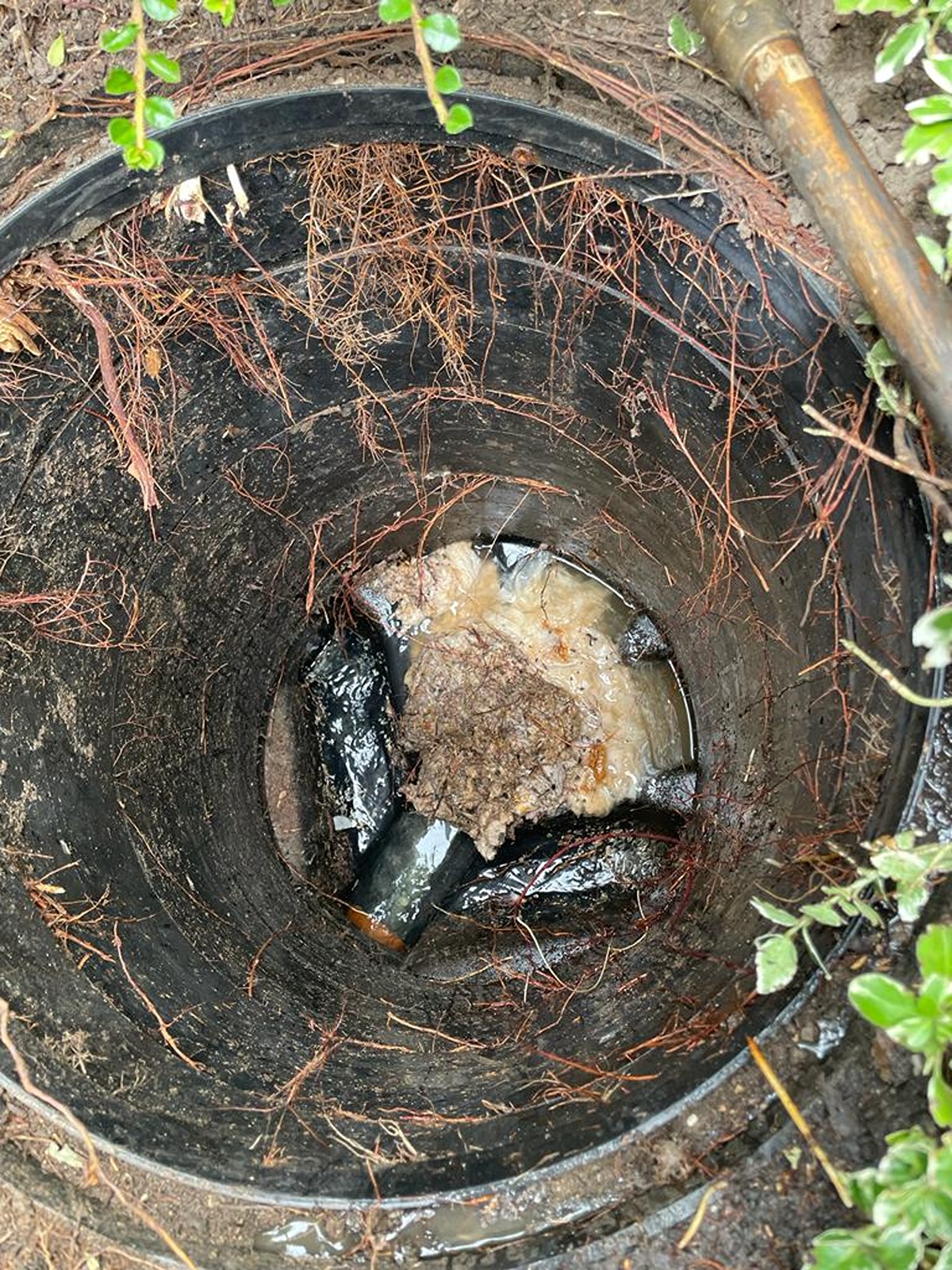

A completely collapsed drain usually cannot be relined directly because the liner needs a usable route and a suitable shape in which to form. Some damaged but still open pipes can be lined after assessment and preparation. A local excavation may also restore a failed section before the remaining pipe is relined.
Distinguish a blockage from a true collapse
A camera stopping at an obstruction does not, by itself, prove the pipe has collapsed. Roots, compacted waste or a foreign object can prevent progress while the pipe remains largely intact. Conversely, broken fragments, severe deformation or soil entering the bore may indicate structural failure that cleaning cannot solve.
The engineer needs enough evidence to identify what has failed and where. This may require careful clearance, another access point or surface locating equipment. Ask to see the footage supporting the diagnosis and whether the section beyond the obstruction has been inspected.
What a liner needs from the existing route
Cured-in-place lining places resin-impregnated material inside the existing drain and cures it into a new lining. The method can rehabilitate suitable cracked or leaking pipework without excavating the whole route. Suitability depends on the host pipe, access, geometry, surrounding conditions and repair design.
A fully flattened or obstructed section may prevent installation or stop the liner forming the intended shape. Missing support and substantial ground voids can also change the engineering requirements. A proposal should explain these limitations rather than promise that resin will make any damaged drain usable.
When excavation and lining can work together
If the failure is limited to one area, excavation can allow the contractor to replace that section and restore a continuous route. The accessible remainder can then be assessed for lining where appropriate. This combines methods instead of treating no-dig work and excavation as mutually exclusive choices.
Request separate details of the excavated section, proposed lining extent and surface reinstatement. If a drive, wall or other structure sits above the defect, access and temporary support may affect the plan. The choice should follow the condition and location of the failure, not simply the label attached to the repair.
Relining does not correct every drainage defect
A liner follows the existing route. It should not be sold as a method for lifting a sunken drain, correcting a major backfall or realigning severely displaced pipe sections. Those problems can leave wastewater and debris collecting even after cracks have been sealed.
The contractor should assess whether the proposed repair addresses the reported symptom. Where roots have entered through a joint, cleaning alone may leave the entry point open; where the pipe has lost its fall, sealing alone may leave the retention problem. Different defects can exist in the same run.
What current network data can show
Anglian Water's Annual Performance Report 2025, resubmitted in March 2026, records 355 sewer collapses in 2024–25, equivalent to 4.53 per 1,000 kilometres of its reported sewer network. These public-sewer figures are not a private-drain failure rate or evidence that each collapse was suitable for lining. Source: Anglian Water.
The useful conclusion for a homeowner is that collapse is a distinct structural event that needs diagnosis. General statistics cannot choose your repair. Accessible camera evidence, pipe geometry and conditions around the affected section remain the basis for deciding between lining, local replacement and more extensive excavation.
Questions to ask before approving a repair
Ask which sections remain passable, whether any pipe has lost its shape and what the contractor expects the repair to achieve. Confirm how connections will remain open and what completion inspection will be supplied. Establish pipe ownership before work begins, particularly if more than one property is affected.
For a combined repair, ask how the newly replaced and lined sections will join and whether ground voids require treatment. Obtain a clear explanation of access, wastewater restrictions and reinstatement. A detailed scope is more useful than a blanket assurance that the entire job needs no digging.
Summary
The answer depends on what has actually collapsed and whether a usable pipe route remains. Clenston Ltd can assess drainage in Manchester and explain where relining is suitable and where excavation may be necessary.