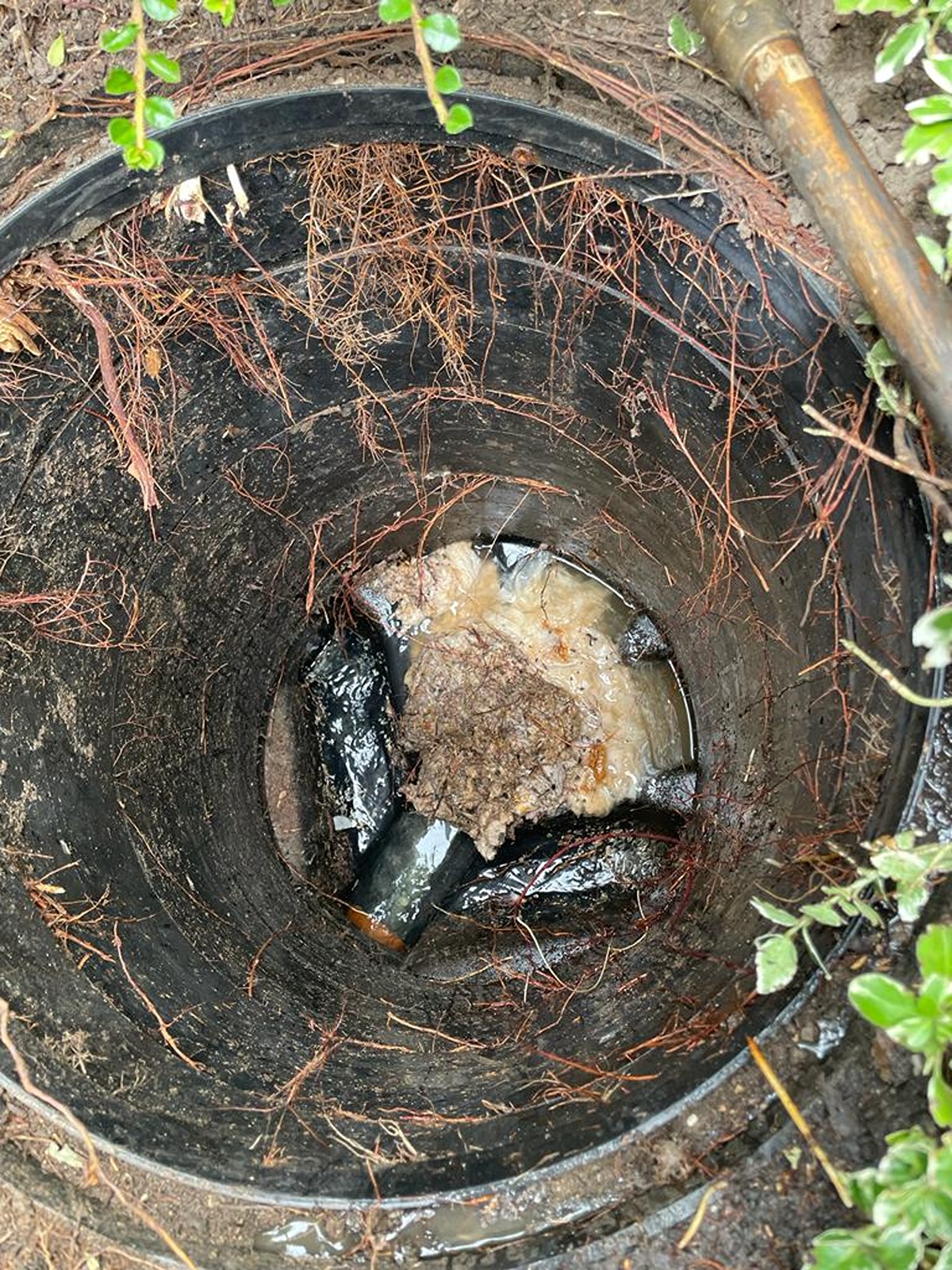

No-dig drain repair rehabilitates suitable damaged pipework from existing access points, avoiding an open trench along the whole route. Drain relining and local patch repairs are common examples. The term describes reduced excavation, not a guarantee that every job needs no digging or that every defect can be repaired this way.
How a new lining forms inside the old drain
With cured-in-place pipe lining, the installer positions resin-impregnated material inside the existing pipe and cures it into a hardened lining. The repair is designed around the pipe and defect being treated. It can seal suitable cracks and joints while retaining the existing underground route.
A local patch focuses on a particular defect, whereas a longer liner covers an extended section. These are different scopes, not interchangeable names for the same quantity of work. Ask which method is proposed, how far it extends and why it matches the recorded condition.
The survey decides whether no-dig is appropriate
CCTV helps the contractor assess visible damage, access, bends and incoming connections. Cleaning may be needed before the condition is clear enough to specify a repair. The survey should identify areas it could not reach, as an uninspected section cannot simply be assumed suitable for lining.
Where the pipe has fully collapsed, has severe displacement or needs its fall corrected, excavation may be required. Ground conditions and missing support can affect the design. A competent proposal explains which problems would remain if only the visible cracks were sealed.
A recent example of lining at network scale
Yorkshire Water's March 2026 announcement described a £1.5 million project to reline 3.2 kilometres of wastewater sewer at Bishop Wilton. It said structural lining aimed to reduce groundwater entering the network and improve resilience. This public infrastructure project is not a domestic price or timetable benchmark. Source: Yorkshire Water, March 2026.
This illustrates an established rehabilitation approach, but its use on a large network does not establish suitability for an individual household pipe. Your repair needs its own inspection, specification and completion checks. Avoid comparing a short private drain quotation with a scheme covering kilometres of infrastructure.
What happens during a typical repair
The contractor confirms the pipe condition and prepares the affected run. The selected patch or liner is installed and cured using the system's specified method. After installation equipment is removed, the completed section is inspected and relevant connections checked before the drain returns to use.
Preparation matters because deposits, roots or obstructions can interfere with installation. The quotation should explain any cleaning or cutting, how wastewater will be managed and whether connections require reopening. These tasks are part of a successful repair rather than optional extras discovered after work starts.
What disruption can be reduced
Where suitable existing access is available, lining can avoid opening a continuous trench through a garden, driveway or other surface. This may reduce excavation and reinstatement. It does not eliminate working space, equipment, noise or the need to restrict wastewater use during installation.
Some jobs still need a local excavation for access or to replace a failed section. Ask for a plan showing what surfaces will be disturbed and what reinstatement is included. Describe the method as reduced excavation where that is the actual proposal, rather than assume no-dig means the site is untouched.
Compare specifications rather than headline claims
A useful quotation identifies the repair location, length, material system, preparation and completion evidence. Check whether the recommendation addresses the reason for the complaint: a liner can rehabilitate suitable damage, but it does not remove an incorrect gradient simply by forming inside the old route.
Ask about warranty terms separately from claims about design life. Duration depends on the system, installation and operating conditions; a universal lifespan or percentage saving would be misleading. Keep the initial survey and final inspection together as a record of what was repaired and how it was checked.
Summary
No-dig repair can preserve much of the surface above a suitable drain while treating damage from inside. Clenston Ltd can assess the pipework in Whitefield and explain whether relining, a local patch or another repair is appropriate.